
Every few years, someone declares an entire profession obsolete. They have been
saying it about SEO for a long time now. They are still wrong
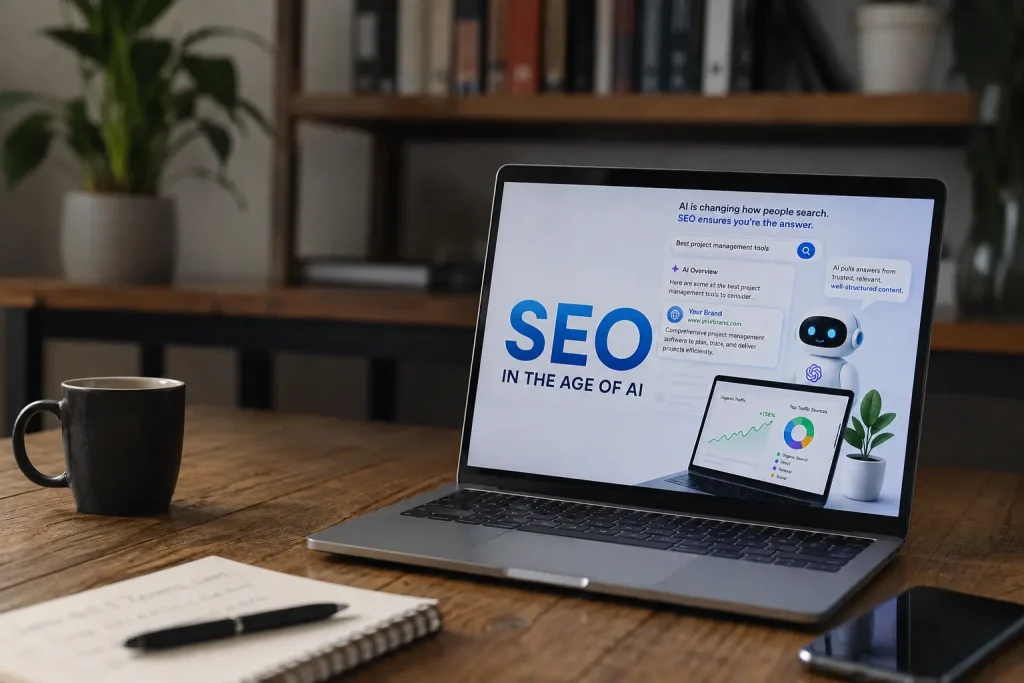
Every time a major technological shift happens, someone declares a profession dead. When calculators arrived, accountants were supposedly finished. When GPS came out, map-makers were doomed. When social media exploded, traditional marketers were told to start updating their resumes. None of it played out that way, and the same pattern is happening right now with SEO specialists in the age of AI.
I want to make a direct case for why a skilled SEO specialist is not just still relevant in 2025, but more important to a business’s success than at any previous point in the field’s history. And I want to do it without the usual vague reassurances. Let me show you the actual reasoning.
The myth that will not go away
The fear makes sense on the surface. AI tools can generate keyword lists in seconds. They can draft meta descriptions, produce outlines, audit technical issues and spin up a full article before you finish your morning coffee. To someone who has never worked inside an SEO campaign, it can genuinely look like the whole job has been handed to a machine.
But that view confuses the tools of SEO with the discipline of SEO. A hammer does not replace a carpenter. What AI tools do is handle execution tasks faster than a human can. What they cannot do is think strategically, understand business context, read ambiguous data correctly, or build the kind of relationships that earn genuine authority online. Those things still require a person.
What an SEO specialist actually does all day
Ask most business owners what SEO is and they say keywords. Ask most SEO specialists what they do all day and the answer is considerably more complicated. In practice, this role spans at least six distinct disciplines, and a weak link in any one of them limits the results across all of them.
That last item is worth pausing on. AI oversight is a brand new responsibility that did not exist five years ago, and it now sits firmly inside the SEO specialist’s job description. Somebody has to manage the machines. Somebody has to check whether the AI-generated output is accurate, original and actually aligned with what the business needs to communicate. That somebody is a trained human professional.
Why AI makes human SEO judgment more critical
Here is the part that surprises people. The more AI content floods the internet, the more valuable authentic, expert-driven content becomes. Google saw this coming. The Helpful Content system and the expansion of E-E-A-T guidelines were both direct responses to a web that was filling up with generated material that was technically passable but humanly hollow.
AI democratizes content creation. That means uniquely human insight becomes the scarcest resource on the web. The SEO specialist’s job is to harness that advantage and make it visible to search engines.
At the same time, AI-powered search is genuinely rewriting what it means to rank. Google’s AI Overviews, Perplexity and Microsoft Copilot are all pulling answers from across the web and presenting them without requiring a click. An SEO specialist now has to understand how to optimize not just for traditional search results but for citation inside AI-generated answers, a growing discipline some are already calling Generative Engine Optimization. That is not something an AI tool figures out on its own.
The skills no machine can replicate
I want to be specific here rather than vague, because “human judgment” can start to sound like a comforting abstraction. So let me walk through the capabilities that genuinely cannot be automated regardless of how good the models get.
Business context
An AI tool does not know your company is pivoting from B2C to B2B next quarter. It does not know your most profitable product line is underrepresented in your content. It does not know a competitor just lost a major client and their organic traffic is now vulnerable. A skilled SEO specialist understands the business first and shapes search strategy around those realities.
Reading ambiguous data
Organic traffic dropped 18 percent this month. Was it an algorithm update? A technical issue that crept in during a site migration? Seasonal behavior? A shift in user intent? Two pages cannibalizing each other? An AI tool can surface the data. Figuring out what it means in context, and deciding what to do about it, requires trained human interpretation.
Relationship building for link authority
The backlinks that actually move rankings come from real relationships with real publishers, journalists and industry voices. Reaching those people, building credibility with them, pitching ideas they want to cover, that is fundamentally human work. No algorithm can manufacture genuine trust between two people.
Creative differentiation
The content that dominates search is not just thorough. It offers an angle nobody else has taken, a proprietary data point, a perspective rooted in real experience. That creative spark has to come from a curious, informed human mind. AI can polish the execution. It cannot supply the original idea that makes the piece worth reading in the first place.
What businesses lose when they cut SEO
Organizations that reduced their SEO investment assuming AI tools would compensate have generally learned a costly lesson. Organic search is typically the highest-converting and lowest-cost acquisition channel a business has over a three to five year horizon. It does not manage itself, and it does not recover quickly once neglected.
Note for business owners: Using AI tools without a specialist to guide them is like handing a contractor a full set of tools and no blueprint. The tools cannot make strategic decisions on their own. Without expert direction, automated SEO workflows can produce duplicate content, keyword cannibalization and technical errors that actively drag your rankings down rather than lifting them.
How the SEO specialist role is growing
The smartest SEO professionals I know are not resisting AI. They are using it to do more than they ever could before. A specialist who once managed ten client campaigns can now manage twenty, because AI handles the repetitive execution work while the specialist focuses on strategy, creative direction and the things that genuinely require human thinking.
The role is also expanding into new territory. SEO specialists are becoming generative engine optimizers, learning how AI answer systems select and cite sources and structuring content to earn those citations. They are becoming data storytellers, turning complex organic analytics into clear business narratives that leadership actually understands. And increasingly they are working as brand architects, recognizing that the companies most likely to appear in AI-generated answers are the ones that have built real authority and recognition across the entire web.
This is not a profession in decline. It is a profession in the middle of a major upgrade.